Making AI Work with Work
Powerful AI is here. It will change everything. Yet, it hasn’t changed much. Even though AI has shown remarkable abilities: it can produce working code, deftly manipulate spreadsheets, and control computers. It has been widely adopted in white-collar work. Yet somehow, in the grand scheme of things, the world hasn’t changed much. Software is still buggy, and it’s hard to attribute economic growth to AI uplift.
Some of this is because AI is not powerful enough to transform everything yet. The nature of AI intelligence is still jagged. It can solve a millennium problem, create animated music videos, but can’t write this document to the standard of quality I’d want.
AI agents are effective and autonomous for tasks with verifiable goals, which are well represented in popular benchmarks and learning environments. They can also make reasonably good decisions where the correct choice is easy to check.
However, I’m unsure if powerful AI can be a drop-in replacement for human jobs in the near future. Jobs involve noticing what needs doing, deciding what matters—and this involves getting access and cooperation (with other humans) or recalling context that may not have a concrete record. Organisations live through a series of long-horizon decisions where it is not feasible to verify if any particular decision was correct and led to the most optimal outcome. Societal norms thus require us to still have a human to own these long-horizon outcomes. It’s hard to see an alternative: even in a hypothetical future where an AI system is doing “all possible work,” someone has to be on the hook to align it to human needs.
This is why we still need to coexist and cowork with AI systems, and I posit that the current means of doing so are ineffective, which is a big reason for why AI hasn’t had the impact it could have. Most existing systems are skeuomorphs, “horseless carriages” or have a quality of AI being tacked on in ways that do not indicate strong form-context fit. Moreover, organisations themselves need to change to fit the strengths of the technology.
We need to find better ways to set up systems, interfaces, and processes for humans and AI to collaborate and create productive coevolutionary loops.
Here, I present a series of challenges relevant to making AI work well for organisations. What does it mean to reorganise work around agents? How do humans delegate and collaborate with AI systems? How can we make sense of the work produced by agents? How can an organisation learn over time from this collaboration?
Reengineering work
In Don’t Automate, Obliterate (1990), Michael Hammer argued that new innovative technologies (at the time, IT systems in factories) should not be installed on top of inherited handoffs and departmental divisions. The boundaries of work must be redrawn around the new bottlenecks brought about by AI capabilities.
The new constraints are understanding the work done—and the idle time where it is waiting for someone’s approval. Putting an agent to work on anything that aren’t these bottlenecks will not increase productivity at the organisation level. It may even hurt it by creating more stress on the bottleneck (in the form of unreviewed work). If dropping an AI agent into a shared chatroom, or handing everyone a Claude subscription did not improve an organisation’s overall productivity, this is likely why. We need to make sure that AI is speeding up work that is finished, and not work that is waiting to be finished.
A paper by NBER proposes a model for reasoning about how work boundaries should change with the advent of AI automations. The unit of redesign is around the human-approval bottlenecks. Instead of remapping existing tasks to AI agents as-is, you have to change the responsibilities and task boundaries based on checkpoints where human input or understanding is needed.
So if you have an existing workflow that looks like this, all done by humans:
You may want to reengineer it to be something closer to this:
All the previous work of fetching and cleaning the data and analysing it still happens, but they are not broken apart as separate tasks, rather they are internal operations to a larger unit that’s handled end-to-end by an AI agent. A similar process of redefining work boundaries for a bank account reconciliation was described by Vasuman Moza in Applied AI Doesn’t Work.
Therefore, a scattered peppering of “AI magic dust” in several localised places within an organisation is going to do little to improve productivity, and neither is indiscriminately drowning all existing processes in AI tokens across all tasks without changing the process. What will help however, is discovery of where handoffs and coordination happens in existing workflows which would allow organisations to reengineer them so that work throughput is maximised at the constrained points, which dictate the throughput of the whole system.
An effective multiplayer AI system has to be able to surface the true behaviours and workflows that allow the organisation to reengineer it into an “assembly line” that is amenable to continuous improvements and calibration. This is the floor that needs to be cleared. But to get there, we need to start somewhere. And a natural place to start are the agents in a shared chatroom.
Agents in a shared chatroom
A shared messaging channel is a natural starting point for collaborative work. Given the inclinations to be a chat assistant, why not drop the AI into existing Slack or Teams channels and respond to several users in the form of an agent?
Agents, in practice, are often a packaged boundary that assemble the following components:
These agents do work, often in a sandbox acting like its own computer and create sessions that grow (and compact, and fork) as users interact with them.
It’s possible to organise agent identities in several ways, depending on how the above components are composed together.
The Generalist Chatbot. Users have one agent identity to interact with. They may orchestrate other agents or subagents and fan out tasks. In this situation, the policy and skills are late-binding. Any kind of specialisation for a particular task or workflow is figured out after the user prompts the agent. Agent sessions are often initiated in a chat thread by a coordinator agent.
Claude Tag is the poster child of this approach to multiplayer agents. Everyone only tags an @Claude and it is up to that Claude to figure out the policy, skills and relevant memory based on certain rules.
The Swarm of Specialists. This is akin to how human roles are set up to divide responsibilities in a real organisation. These are often early-binding. The assembly of available skills, policy and state is defined up front, or configured by the vendor and attached to a persistent identity. There are many agents one could tag and invoke, and agents can also talk to each other and hand off work.
OpenAI’s Dots, Grok Bot or Hermes with bot mode capture this form. Users set up one or more such bots, and carry with it all the context and work they have been doing.
Bringing agents into a chatroom also puts forth questions about organisational design.
The early-binding solution with a swarm of agents, may be to specify the roles up front and have them set up in a hierarchy, just as we might with an organisation of humans. This could be done in a top-down manner, where an operator, with inputs from individual contributors, decides the right arrangement for an organisation and everyone has to work with this arrangement.
Another way to cut this is to give individual users their own freedom to set up agents and have them discover use cases iteratively, and then organise these agents into a useful hierarchy. Appropriate controls must be present to avoid proliferation and duplication of agents.
There can also be late-binding solutions that are more task-oriented. The agent figures out the right orchestration for a particular task, with minimal upfront configuration. As competencies are iterated over and discovered, they could be extracted into workflows and agent skills.
All these arrangements make it tempting to think of AI as employees. Are they?
Should AI be an employee?
An anthropomorphised “AI employee” serves as a natural and obvious surface for interaction. Talking to an omnipresent, unembodied intelligence, where the lifetime of the bot is scoped to the lifetime of the task, can feel alien. A bot with a name and identity, in contrast, can feel quite familiar. An employee learns your preferences and accretes a strong identity over time. Like any good skeuomorph, it lets us naturally transition our existing ways of working into a new AI-driven economy. We already have existing ways of organising human roles and work, and this would transfer to this form factor.
However, there are many ways present AI systems do not share characteristics of an employee, which may result in surprises for users that don’t know how these harnesses are set up.
AI agents lose coherence over time, due to the architecture of the transformer, where a model can only hold a fixed amount of tokens in a session. Even this understanding degrades as the session gets longer. To keep going, agents go through a lossy compaction process and may need to offload information to external storage. Humans on the other hand, gain coherence over time.
For sophisticated agents, AI engineers often set up product evaluations where they continuously collect copious amounts of its traces and activity, observe agent behaviours and calibrate them to match the product goals and organisation’s objectives. These evals can then catch when they drift over time and steer the agent back to the right behaviour. You won’t quite work with an employee in this way.
Your coworker doesn’t have to retrieve “skills,” or a folder of instructions teaching specific workflows. You won’t see them forget to “retrieve a skill” and thus fail to adhere to a specific workflow.
There’s a major rift in recall when some information is within the context window versus when it is outside it, and behind a bot persona, it can be hard to tell what is in the context of the agent. You have to describe tasks differently than you would with a human, and repeatedly specify constraints in a way specific to working with agents.
Additionally, human roles come with accountability. People have their reputations to protect, and social contracts to fulfil. An AI does not have this. In my use, AI agents often make mistakes or perform in ways that would have resulted in an equivalent human getting fired. But we keep them because they are useful in ways humans are not.
The anthropomorphising form factor can also mask certain abilities that agents have. Unlike humans, they can fork a clone of themselves containing the same context, orchestrate other agents, work around the clock without getting tired, and churn out code at superhuman speeds. Every bot is equally capable (given the same model) and thus segregating them into the roles amounts to a certain constraining of its abilities, to fit into the division of roles that humans have. Today’s agents are not great at coordinating with each other, but they do not have the limitations that humans have when it comes to handing off work. This can open up new ways of working.
AI employees make sense as a form factor, but good interfaces for them should help users inspect and understand all the ways in which they are not like their human counterparts. Not only must the employee’s capabilities be legible, so must the large volumes of work they produce. Because understanding is a huge bottleneck.
Understanding is the bottleneck
Most knowledge work will involve the creation of shared artefacts: documents, spreadsheets, dashboards and reports, to name a few. These artefacts are most useful as tools to aid complex problem solving by being an extension of human’s working memory, providing a lens to explain the state of the world, and help with accountability and audits.
What are the opportunities in a world where AI is heavily involved in the creation and production of these artefacts?
AI agents can create a lot of large artefacts quickly, which creates a bottleneck: the understanding and comprehension of its work. Geoffrey Litt argues that understanding the work produced is a prerequisite for humans to come up with the next idea to evolve the system, and ensure their continued participation.
There are many dimensions to consider when we are trying to create a shared understanding that helps organisations come up with the next idea. Not everyone needs to understand everything that agents do. Each person needs a view into the work that gives just the right amount of information that is relevant to them.
Today, we need to find the right tradeoff between the speed of production from agents and the friction of understanding the work so as to figure out what needs to be done over a long horizon of time.
Bringing humans into the agent session
Previously, we could rely on knowledge workers to have a good mental model and deep understanding of what they are working on because producing the work itself requires the necessary friction that produces a deep understanding of work.
Chatroom agents bypass this mechanism. They are an instrumental approach, where humans are focused on a specific goal, and it only matters that the goal is met while respecting any relevant constraints.
While a chatroom agent can link to or open up the product of their work, it still obscures details of the agent’s thinking and process. This is a loose feedback loop.
A more engaged approach could be to bring multiple users as participants within an AI agent’s session, rather than have an agent participate in a human’s chatroom. This is the approach taken by Zed’s Delta and (to a lesser extent) Amp’s multiplayer mode.
In this approach, all comments and conversations from all the participants are interleaved into the agent’s session and context window. This allows for more fine-grained steering that is more suitable for tasks where some exploration is needed. This deeper engagement with the users also helps build understanding of the system with all the users involved, which reduces cognitive debt.
Whether a task needs this inversion is a matter of taste. Often, work that is on the edge of an AIs abilities, or work that is hard to verify, or work that is crucial to be deeply understood would benefit from this approach.
There remains a lot of work where the goals and outcomes matter far more than the details over a long horizon, where a little more speed will directly benefit the organisation. For this, we consider collaborative, shared, and dynamic artefacts.
Realtime collaboration on shared artefacts
Artefacts such as documents, slides and spreadsheets in an organisation are the lenses through which various people get the right information and understanding at the right level. To be able to work on them collectively helps build a shared understanding.
We already have tools that enable realtime multiplayer editing of artefacts between humans. AI agents open up many opportunities for improving the quality and productivity of work, and also brings new design considerations along with it. Most implementations focus on summarisation and underpowered information retrieval, which do not fully exploit the inherent capabilities of AI models.
A first step, one that is increasingly commonplace, is to have the agent be a participant in multiplayer text canvases. Tools like Automerge, Yjs and Patchwork demonstrate ways to improve the version control experience, which are important in the face of increasing velocity of changes brought about by AI agents.
However, most real world work today exists in the form of documents from external systems and sources, often in proprietary formats or locked up in external SaaS tools. Therefore, having internal canvases will never be sufficient—a good shared artefacts implementation must be able to provide a solid ecosystem of connectors to external services, and create adapters for the data retrieved from these external services.
And then, because an agent is tireless, we should make it do a lot more work in helping us deeply understand what it has done, at a level beyond reasonable to ask of a human.
Dynamic artefacts
Our documents and artefacts can be a dynamic medium.
In-house implementations of collaborative documents and canvases allow for better experiences in the form of malleable software, or software that can modify itself to fit the immediate needs of the environment and business context . Cloudflare OS uses gadgets, which are code-based artefacts which allows for greater control and guarantees over the security and access policies.
AI greatly reduces the friction involved to write programmatic scripts that can retrieve and crunch data on request, and visualise it in useful ways. A useful pattern is to leverage this medium to create rich interfaces to help explain and visualise the state of the world in an interactive way, which helps bring humans back in the loop for understanding and comprehending the work. Maggie Appleton of GitHub Next uses the idea of “boundary objects” to create artefacts that help reduce the cognitive overhead of reading large verbose walls of text.
A good boundary object isn’t necessarily about having great visuals. It must pull all the levers that help facilitate understanding. A lot of “generative UI” efforts fail at this step.
So what makes a good dynamic medium for understanding?
First, they must be high bandwidth. We do not reject prose, but we think it can be well-supported by high-bandwidth visualisations, such as charts and tables.
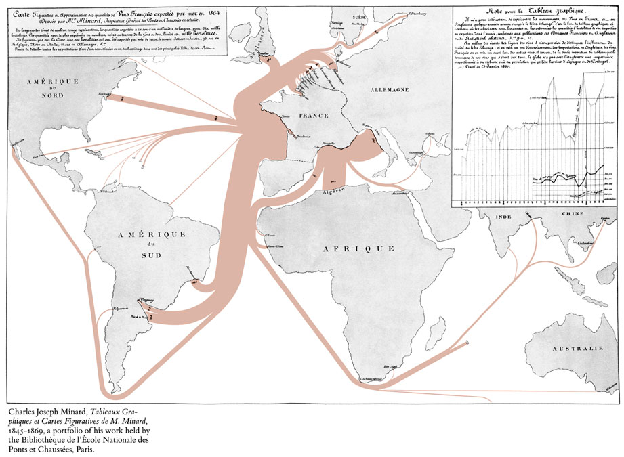
Second, they must facilitate effortful retrieval. Most artefacts today convey understanding via reading. Unfortunately, reading does not work too well—it often gives someone the illusion of learning. True learning happens through feedback loops, where a user’s understanding is tested and measured against the ground truth. There’s a fine line to consider here. Forcing every document to have a quiz can get frustrating. This is precisely where interactivity can be helpful. It creates a feedback loop that resolves a person’s projected prediction with the actual working of a system.
They must also be flexible and multi-dimensional. The programmer’s concerns are different from a product manager’s concerns are different from the sales analysts’ concerns. A dynamic artefact can pull from the same ground truth and show everyone the view that they need to understand, and enable them to relentlessly zoom in and out the various levels of detail. Language models can facilitate this.
The effectiveness of a collaborative, shared, and dynamic artefact relies on the effectiveness of the ground truth that it derives from, and this is the memory and knowledge within an organisation.
Organisational Memory
Let’s take a broader view of memory—forms other than facts in an information system. Walsh and Ungson’s seminal work on organisational memory notes that memory resides in many places like,
- people’s heads
- organisation culture
- the processes that transform organisations
- social structures and role hierarchies
- the broader ecology and physical spaces
- the world outside the organisation, eg: what the competition did
We can think of memory capturing a particular stimulus (what happened) and a response (how we dealt with it). Social structures and ecologies can often tend to only store the response without the stimulus. Transformational processes can store the who, what, when, where and how without the why. Not all of this is conscious. Some of these buckets constitute fast automatic retrievals of memory rather than deliberate effortful retrieval.
An effective AI system must consider all these forms of memory. It must provide means to modify memories beyond facts, by allowing organisations to distill learnings from past processes, redefine work boundaries, extract “tribal knowledge” from people, and reshape an organisation’s culture.
The extraction of knowledge required for this broader and effective use of memory requires an emphasis on experiential memory rather than a mere fact-based memory. The processing of agent traces and interactions at organisational bottleneck points, for example, can help point to improved processes that help increase productivity.
We also cannot assume that the retrieval of memory always improves the effectiveness of decisions. How a memory is inserted, managed and retrieved is important. Old precedents misapplied to novel situations can lead to misguided decisions or complacency that stagnates progress.
Certain kinds of “remembering” are explicit and require a deliberate lookup like facts in a database, or work in a task tracker. But other forms of memory are implicit and “automatic,” like the procedures and workflows in an organisation, culture, and ecology.
Thus, AI systems must also pay attention to what it chooses to forget over time. It is not enough to clear up old and stale memories, but an update on new stimuli must also consider the “automatic” retrievals. A new set of facts retrofitted on old processes may not lead to effective forgetting or updates of an organisation’s memory. It will only recall newer facts through pathways that embed older ways of working.
An AI system must thus not just merely “remember” a fact, but take on an active role in helping sort through old knowledge in the organisation and help human collaborators understand the appropriateness of a remembered fact. It must also provide a systems view of the organisation so to facilitate the correct kind of memory update and cleanup.
Distilling knowledge
Every organisation leaves behind a whole bunch of traces. Agent traces make a large chunk of an organisation’s memory observable in great detail. In the before-times, you often only had the inputs, the outputs and whatever it is that you kept in a system of record. With agents entering the workplace, you have a log of thousands of interactions that open up the processes of an organisation, often in the form of a negotiation between the employees and the agents.
We could not have this kind of information before. It was simply too high-friction to temporally log all the three approaches tried and thrown away when resolving an issue or producing an outcome. But agents have made it such that traces are formed as byproducts of getting the work done. It just so happens that the “byproducts” here are gold. It doubly helps that AI is good at dealing with the volume of traces that are produced by AI.
Why are traces valuable? Because they enable the distillation of knowledge, ie, taking a messy, noisy set of processes, and extracting only the truest essence of it, thus making them more legible and efficient. With the work being more granularly visible in the agent traces, it is possible to catch inefficiencies and reorganise work to eliminate them.
The distillation of knowledge can take many forms. They can be used for encoding skills for the agents to use, extract the processes for other humans, and help explain precedents and provide the “why” for processes that are “automatically” retrieved.
Eventually the distilled knowledge also forms the basis for an independent and robust AI stack within an organisation. It allows one to reduce dependence on a specific AI vendor as the machinery to refit a new vendor can be derived from these traces.
Raising the Bar
AI models are exponentially improving, yet the road ahead for transforming the world with it is long. We need to raise our bar to make this an effective technology. This means starting from reexamining how we do our work to fit AI systems, then reexamining how we build our AI systems to fit our work, and then thinking of ways to open up our understanding of the work they produce, and incorporate that to make our organisations even more effective. This forms the core outer loop.
Each challenge described here contains fractal multitudes of subproblems that we need to tackle to make AI effective in the workplace, and ultimately for technological progress and growth.
Current AI systems have barely scratched the surface, and I remain optimistic that we can evolve our solutions to serve us a lot better.